Many buyers assume that all matt floor tiles are non-slip. That is not always true. “Matt” mainly describes how a tile looks, while “R11” refers to tested slip resistance under set conditions.
When comparing matt tiles vs R11 anti-slip tiles, consider more than colour and texture. Wet performance, cleaning effort, footwear, drainage, traffic, and installation conditions all matter. This guide explains the main differences and helps you choose suitable tiles for homes, outdoor areas, and commercial projects.
What Is the Difference Between Matt and R11 Tiles?
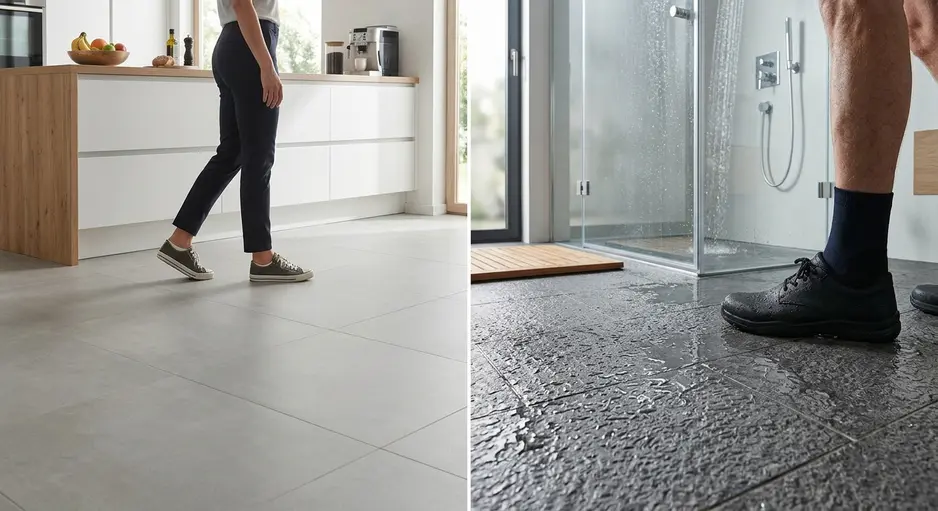
What are matt finish tiles?
Matt finish tiles have a low-sheen surface that reflects less light than polished tiles. Their calm appearance works well in modern, rustic, and minimalist interiors. They may also make dust, small marks, and water spots less noticeable than glossy surfaces.
However, matt finish describes appearance rather than a fixed level of grip. Matt finish porcelain tiles can be smooth, lightly textured, or deeply structured. Two products that look similar in photographs may perform very differently when wet.
Common uses include bedrooms, kitchens, hallways, and matt tiles for living room floors. Buyers should still check the product’s technical data instead of assuming that a low-sheen surface is automatically safe in wet areas.
What are R11 rated tiles?
R11 is part of the R9 to R13 slip resistance classification commonly linked to the DIN 51130 shod ramp test and related EN 16165 testing. The test involves a person wearing specified footwear on a contaminated, inclined surface.
Within that test system, R11 represents greater tested grip than R9 or R10. It is generally linked to an acceptance angle of about 19 to 27 degrees. It should not be described as “slip-proof,” since actual safety depends on use, contaminants, footwear, and maintenance.
Can a matt tile also have an R11 rating?
Yes. A product can have both a matt appearance and an R11 classification. The central difference is simple: matt is a finish, while R11 is a test-based performance rating.
Always verify the exact product code, size, and surface. A tile collection may contain several finishes with different results, even when the products share the same colour and design.
How Is Tile Slip Resistance Measured?
R ratings and textured surface profiles
The shod ramp method assesses how a surface behaves under defined test conditions. R ratings range from R9 to R13. A higher rating usually indicates greater grip within that system, though it may also involve a more pronounced textured tile surface profile.
R ratings should not be used as a stand-alone answer for every project. Local building codes, workplace rules, accessibility needs, and the expected contamination must also be reviewed.
Pendulum test value and wet-floor risk
The pendulum test measures surface friction under wet conditions by moving a rubber slider across the floor. UK Health and Safety Executive guidance commonly treats a wet pendulum test value of 36 or above as indicating a lower slip potential.
This value is useful when assessing wet floors, but PTV and R ratings are not direct equivalents. ANSI A326.3 DCOF testing also uses a different method. Results from these systems should not be converted through a simple comparison chart.
Does R11 confirm barefoot slip safety?
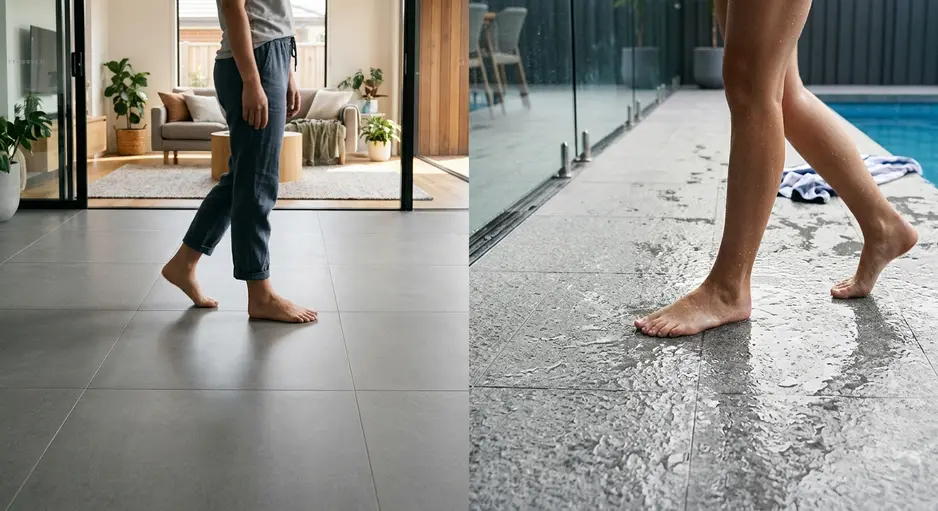
Not by itself. R testing generally relates to footwear. Barefoot areas may be assessed under separate methods, including Class A, B, or C classifications associated with DIN 51097 and EN 16165.
For showers, changing rooms, pool surrounds, and similar spaces, request evidence that covers barefoot slip safety. The right result depends on the location, slope, water depth, user group, and local requirements.
What should a valid test report show?
- The exact product name, code, size, and finish
- The test method and test conditions
- The testing laboratory
- The measured result and classification
- The report date and intended application
Matt Tiles vs R11 Anti-Slip Tiles at a Glance
Primary characteristic
Matt finish tiles: A low-sheen appearance with a surface that may range from smooth to structured.
R11 anti-slip tiles: A defined slip resistance result under a specified shod ramp test.
Wet-area performance
Matt finish tiles: Performance varies. A matt look alone does not confirm wet grip.
R11 anti-slip tiles: Usually provide stronger grip under the stated test conditions, but are not risk-free.
Cleaning and comfort
Matt finish tiles: Lightly textured products are often easier to clean and more comfortable in dry interiors.
R11 anti-slip tiles: Deeper textures may hold soil, grease, soap residue, and mop water.
Typical applications
Matt finish tiles: Living rooms, bedrooms, kitchens, hallways, and dry commercial interiors.
R11 anti-slip tiles: Patios, wet entrances, service areas, workshops, and selected commercial floors.
Porcelain body density and water absorption are separate from the surface finish. Buyers must also review frost resistance, breaking strength, stain resistance, and the relevant abrasion resistance rating.
Where Should Matt and R11 Tiles Be Used?
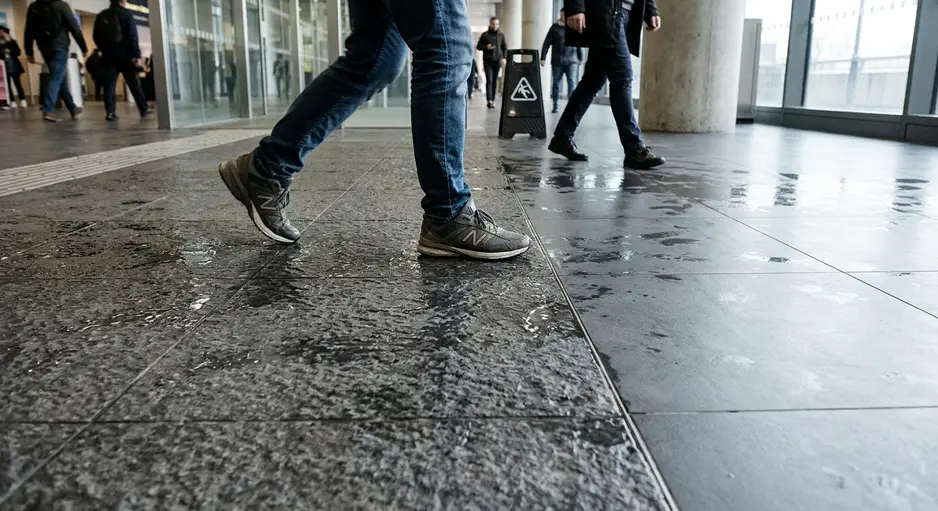
Matt floor tiles for living rooms
Matt surfaces reduce glare and create a relaxed look, making them a practical choice for living areas. They also coordinate easily with wood, stone, concrete, and soft furnishings.
In a dry, open-plan home, an aggressive anti-slip texture may add cleaning effort without providing a meaningful benefit. Choose based on appearance, comfort, cleanability, colour variation, and resistance to expected foot traffic.
Are R11 tiles suitable for bathrooms?
R11 tiles for bathrooms may suit wet entrances, utility areas, and floors that often receive water. Yet an R11 result does not automatically confirm suitability inside a barefoot shower.
For shower floors, review the relevant barefoot classification. Tile size and grout joints may affect grip underfoot, while drainage slope and installation quality help prevent standing water. Soap and shampoo can also change wet area flooring performance.
R11 tiles for poolside and patio areas
R11 tiles for poolside and patio areas may provide useful grip, but buyers should examine the full specification. Pool surrounds require suitable barefoot data, effective water drainage and surface grip, and resistance to the expected chemicals and weather.
For patios, confirm that the product is approved for exterior installation. Suitable non-slip outdoor tiles may also need low water absorption, frost resistance, weather stability, and enough strength for the expected load.
Even well-tested matt and R11 tiles for outdoor paving require the correct slope, substrate, adhesive, grout, and movement joints. Slip-resistant texture cannot compensate for poor drainage.
R11 tiles for commercial flooring
R11 tiles for commercial flooring are often considered for restaurant service zones, building entrances, wash areas, workshops, retail thresholds, and hospitality projects. Selection should reflect the actual risks rather than the rating alone.
Project teams should examine the suitability for high-footfall spaces, likely contaminants, cleaning process, abrasion resistance, and applicable safety standards for commercial flooring. Areas exposed to oil, grease, or industrial residue may require a different rating or assessment.
Grip, Cleaning, and Long-Term Maintenance
Why can R11 tiles require more cleaning?
The ridges and recesses that improve grip can trap dirt. This difference in glossy versus textured surface behaviour becomes more noticeable in kitchens, outdoor areas, and spaces exposed to soap or grease.
Use a suitable neutral or alkaline cleaner based on the type of soil. A stiff nylon brush or appropriate floor-cleaning machine can reach textured areas more effectively than a basic mop. Rinse with clean water so that detergent residue does not remain on the floor.
Are matt porcelain tiles easier to maintain?
Lightly textured porcelain is often easier to clean than a heavily structured anti-slip surface. However, stain resistance and cleaning effort vary by design, finish, grout, and contaminant.
Test the proposed cleaning method on a full-size sample. Avoid wax-based coatings unless the tile manufacturer approves them, as a coating may alter surface friction.
Basic tile maintenance requirements
- Remove sand and grit regularly to reduce surface wear.
- Clean spills before they dry or spread.
- Prevent detergent and grease buildup.
- Keep grout joints and drainage channels clear.
- Follow the approved product-care instructions.
How to Choose Between Matt and R11 Tiles
Use this seven-step selection process
- Assess moisture: Decide whether the floor is normally dry, occasionally wet, or continuously exposed to water.
- Consider users: Confirm whether people will wear shoes or walk barefoot.
- Review contaminants: Account for rain, soap, cooking oil, grease, chemicals, and pool water.
- Confirm the test method: Identify the standards required by the country, building type, and project specification.
- Balance grip and comfort: A rough surface may be unnecessary in a dry residential room.
- Check technical properties: Review water absorption, frost resistance, strength, stain resistance, and abrasion performance.
- Test a sample: Examine grip, colour, texture, comfort, and cleaning effort under realistic conditions.
Three practical examples
Living room: A standard matt porcelain product may deliver the desired look without the coarse texture of an R11 floor.
Covered patio: R11 porcelain may be suitable if it is also approved for the relevant indoor and outdoor installation conditions, including weather and frost exposure.
Hotel pool deck: Do not choose by R11 alone. Verify barefoot testing, drainage, chemical resistance, maintenance needs, and local safety rules.
How to Select an R11 Anti-Slip Tile Supplier
Architects, contractors, importers, and distributors need product-specific evidence. A reliable R11 anti-slip tile supplier should be able to provide relevant test reports and clear technical details for the product being considered.
When sourcing wholesale anti-slip porcelain tiles, request the following:
- Product-specific slip resistance reports
- Water absorption and frost-resistance results
- Abrasion and stain-resistance information
- Technical data sheets and available samples
- Shade, calibre, packing, and loading details
- Installation and maintenance guidance
Buyers evaluating options from Skytouch Ceramic should request documentation for the exact finish, size, intended market, and application. They should also confirm that the tested surface matches the supplied product. Broad claims such as “safe for every wet area” should not replace technical evidence.
Get Started with Matt Tiles vs R11 Anti-Slip Tiles
Choose Tiles by Performance, Not Appearance Alone
The matt vs anti-slip tiles for flooring decision should reflect the conditions of the project. Matt describes appearance and surface character. R11 describes performance under a particular slip test. Neither term confirms every other technical property.
Compare product-specific reports, review local requirements, and test samples before ordering. For residential, commercial, or wholesale projects, contact Skytouch Ceramic to discuss available matt and R11 options and request the relevant technical information for your intended application.
Frequently Asked Questions
1. Are all matt tiles anti-slip?
No. A matt appearance does not establish a slip rating. Check the report for the exact tile, size, and surface before using it in a wet or high-risk space.
2. Are R11 tiles completely non-slip?
No tile is completely slip-proof. R11 indicates performance in a defined test. Real-world safety also depends on water, contaminants, footwear, drainage, installation, and maintenance.
3. Is R11 better than R10 for a bathroom?
Not automatically. The correct choice depends on where the tile will be installed and whether the area is wet, sloped, soapy, or used barefoot. Separate barefoot test data may be more relevant for showers.
4. Can R11 tiles be used indoors?
Yes. They may be useful in wet entrances, utility rooms, and certain work areas. In dry living spaces, their texture may feel coarse and require more cleaning than smoother matt flooring.
5. What are the best tiles for wet and slippery areas?
The best tiles for wet and slippery areas are supported by the appropriate wet-condition tests and, when needed, barefoot results. Drainage, water absorption, cleaning, installation, and local regulations must also be considered.