Choosing between texture and shine can change the whole feel of a room. Carving tiles add depth through raised, engraved, or grooved designs. Glossy tiles reflect light and create a bright, polished appearance.
Neither finish is better for every home. The right choice depends on the room, lighting, cleaning routine, safety needs, and intended application. This guide compares carving vs glossy tiles for home interiors, including their appearance, maintenance, durability, and wall or floor suitability.
Carving vs Glossy Tiles at a Glance
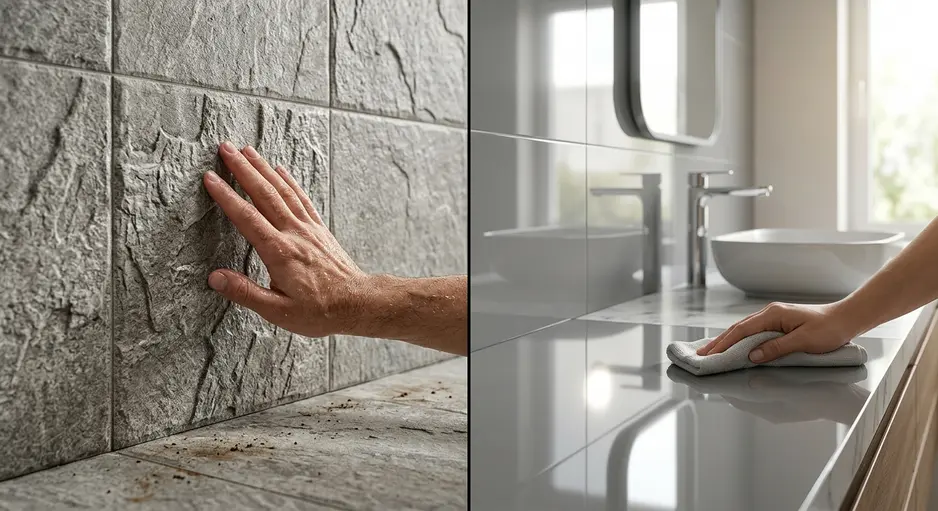
Carving tiles have embossed, grooved, or three-dimensional surface patterns that create texture and visual depth. Glossy tiles have a smooth, reflective finish that improves light distribution and is often easier to wipe clean.
Surface: Carving tiles are textured or embossed, while glossy surfaces are smooth and reflective.
Appearance: Carved designs look dimensional and decorative. Glossy options offer a bright, polished finish.
Light: Relief patterns create soft shadows and visual depth. A reflective glaze spreads natural and artificial light.
Cleaning: Textured grooves may need extra attention. Smooth tiles are easy to wipe but can show marks.
Scratch visibility: Patterns may conceal minor wear. Fine scratches can be more obvious on reflective surfaces under direct lighting.
Wet areas: Suitability depends on documented slip performance, not appearance alone.
Common applications: Carved designs suit feature walls and premium interiors. Glossy surfaces work well on bright, easy-clean residential walls.
Quick verdict by homeowner priority
- Choose a carved finish for texture, visual depth, and statement walls.
- Choose a glossy finish for brightness, simple wiping, and a sleek look.
- Check technical ratings before installing either option on a floor.
What Are Carving and Glossy Tile Finishes?
Carving tiles and three-dimensional surface patterns
“Carving tile” is mainly a market term rather than a universal technical category. It may describe embossed, incised, sculpted, grooved, or digitally enhanced surfaces. Manufacturing methods and performance can differ between products.
Common carving tile finishes include linear grooves, stone-inspired relief, geometric embossing, and floral or abstract patterns. These details create a clear surface texture and tactile feel. Light falls across the raised areas and forms soft shadows.
Heavily textured carving tiles are often more practical on walls. Deep patterns may feel uneven underfoot and take longer to mop. However, some textured products are designed for floors. Always confirm the approved application.
Glossy tile finishes and reflective glaze
Glossy tile finishes may be created with a reflective glaze or a polished surface. Glazed and polished do not always mean the same thing, so check the product description. Both can create rich colour and a luminous appearance.
The smooth finish helps light move through a room. It can make compact or dark spaces appear more open. However, high-gloss floor tiles should only be used when the specific product is approved for flooring and meets the needs of the space.
Which Finish Looks Better in Modern Interiors?
Room brightness and visual depth
Glossy surfaces reflect windows, lamps, and ceiling lights. This makes them useful in smaller rooms, dark passages, compact kitchens, and modern bathroom designs. Light colours can increase the effect, especially when grout is closely matched.
Carved surfaces work in a different way. Their raised details create highlights and shadows, adding visual depth without strong shine. Directional lighting or wall washers can make the relief more noticeable on a living room or reception wall.
Matte and polished surface characteristics
Carved designs often have a softer, architectural character, although their level of sheen varies. They pair well with stone-inspired decor, wood tones, warm neutrals, and luxury interiors. Geometric patterns can also support a clean, minimalist theme.
Glossy surfaces suit sleek contemporary rooms and metallic or neutral colour palettes. They often make colours appear deeper. Yet strong reflections can reveal uneven lighting, fingerprints, or surface marks more clearly.
Grout line visibility and colour matching
- Use closely matched grout when you want a seamless glossy surface.
- Choose contrasting grout only when the grid or pattern should stand out.
- Avoid wider joints unless the tile size or installation instructions require them.
- Check the grout colour beside a physical sample in the room’s actual light.
For example, large-format textured carving tiles can form a warm living room feature wall. Light-coloured glossy tiles can brighten a compact backsplash. In a modern lobby, polished wall surfaces may be paired with a floor that has documented slip performance.
Where Should You Use Carving or Glossy Tiles?
Best tile finish for living room flooring
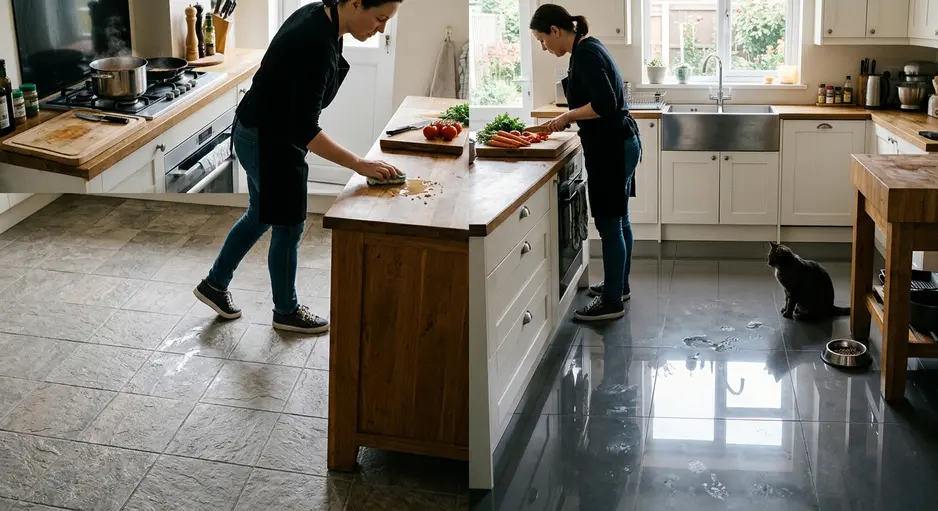
The best tile finish for living room flooring is one approved for floor use and suitable for expected traffic. Check abrasion resistance and surface wear, stain resistance, water absorption, and installation requirements.
Glossy flooring can create an open, elegant effect, but grit and furniture movement may cause visible marks. Scratch visibility under direct lighting is often greater on reflective surfaces. Entrance mats and felt furniture pads can help protect either finish.
Some carving tiles conceal light wear within the pattern. However, deeply sculpted surfaces may be harder to clean or less comfortable underfoot. Do not choose a living room floor based on appearance alone.
Carving tiles for feature walls and premium interiors
Textured carving tiles are well suited to TV walls, headboard walls, dining areas, reception spaces, decorative niches, and retail feature panels. Their relief creates interest without the need for a complex mix of materials.
Carving and glossy tiles for wall decoration may also be combined. A textured focal panel can sit beside plain reflective surfaces, balancing depth with room brightness.
Glossy tiles for easy-to-clean residential spaces
Glossy surfaces are often practical for kitchen backsplashes, bathroom walls, vanity areas, and utility-room walls. Their smooth finish allows spills and residue to be wiped away quickly.
They can still reveal fingerprints, soap film, water spots, and fine dust. As a result, easy stain removal does not always mean less frequent cleaning.
Are glossy tiles suitable for bathrooms?
Glossy tiles can work well on bathroom walls. For shower floors and other wet walking surfaces, select a product with tested slip-resistance data. Do not assume that a tile is safe for a wet floor simply because it is ceramic or porcelain.
Carving Tiles vs Glossy Tiles for Maintenance
Dust and fingerprint visibility
Carved surfaces may hide light dust at first, but particles can settle inside deeper grooves. Glossy tiles do not have textured recesses, yet they show fingerprints, mop streaks, soap residue, and water marks more readily under bright light.
Stain removal and cleaning frequency
For carved surfaces:
- Remove loose dust with a soft brush or vacuum attachment.
- Wipe the surface with warm water and a compatible pH-neutral cleaner.
- Clean textured recesses with a soft nylon brush.
- Rinse the surface and dry areas where water spots are visible.
For glossy surfaces:
- Remove loose grit before wiping to reduce the risk of scratching.
- Use a microfibre cloth, non-abrasive sponge, or soft mop.
- Apply a compatible neutral cleaning product.
- Buff the surface dry to reduce streaks and water marks.
Compatible cleaning products and tools
Suitable tools often include microfibre cloths, soft mops, non-abrasive sponges, and nylon brushes. Use manufacturer-approved products for the tile and grout. Harsh chemicals, abrasive pads, waxes, and oily cleaners may damage the finish or leave a visible film.
Long-term finish retention and maintenance costs
Glossy surfaces may need frequent cosmetic cleaning, while deep relief patterns can take longer to detail-clean. Sealing needs depend on the tile body, grout, surface treatment, and manufacturer’s instructions.
Long-term finish retention and maintenance costs are also affected by water quality, room use, grout choice, foot traffic, and cleaning habits. The finish is only one part of the total maintenance requirement.
How Do Safety and Durability Compare?
Slip resistance in wet conditions
Surface texture may improve grip, but appearance is not a reliable safety test. Some glossy products are approved for floors, while some decorative carved products are intended only for walls.
Ask for tested slip-resistance information for bathrooms, balconies, kitchens, entrances, and pool surrounds. Test methods and classifications differ by country and application. They may include ANSI A326.3 or applicable ISO and local requirements. Barefoot and footwear conditions may also be assessed differently.
Abrasion resistance and surface wear
A floor must handle foot traffic, grit, furniture movement, and routine cleaning. Fine scratches may be easier to see on a shiny surface. Relief patterns can disguise minor wear, although dirt may collect in their recesses.
For high-traffic areas, focus on intended use and verified wear information. Use doormats to reduce tracked-in grit and add felt pads beneath movable furniture.
Wall and floor application requirements
- Is the tile approved for walls, floors, or both?
- What slip classification has been documented?
- Is abrasion or wear information available?
- Can the tile be installed in wet areas?
- Does the tile or grout require sealing?
- Which adhesive, grout, and cleaning products are recommended?
- Do directional patterns require a specific installation layout?
How to Choose Between Carving and Glossy Tiles
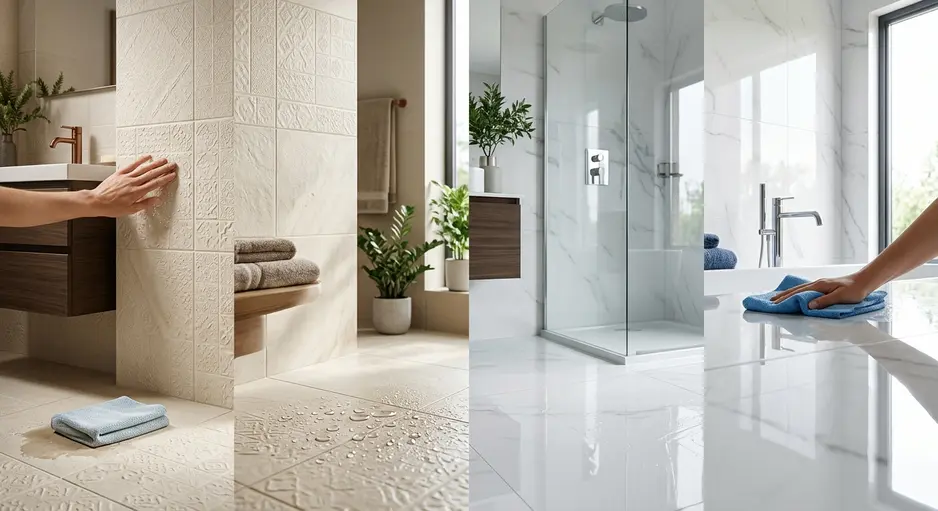
A five-step selection strategy
- Define the application: Decide whether you need a feature wall, backsplash, dry floor, or wet-area surface.
- Set the visual priority: Choose between texture and depth or brightness and shine.
- Assess maintenance tolerance: Consider groove cleaning versus frequent removal of streaks and fingerprints.
- Review technical specifications: Check floor approval, slip performance, wear, water absorption, and stain resistance.
- Test a sample: View it in daylight and artificial light, then test how easily it cleans.
Choose carving tiles if
- You want tactile detail and strong visual depth.
- You are creating a statement or feature wall.
- You prefer a less reflective, architectural surface.
- You can manage periodic cleaning of textured areas.
Choose glossy tiles if
- You want a room to feel brighter or more spacious.
- A smooth, wipeable surface is important.
- You are tiling a kitchen backsplash or bathroom wall.
- You prefer polished, modern interiors.
What should you ask a carving tile supplier?
Ask a carving tile supplier for physical samples, available dimensions, finish details, shade variation, intended applications, packing information, and technical data. For larger projects, discuss batch consistency and supply capacity before confirming the order.
You can explore relevant options from Skytouch Ceramic and confirm whether each product is suitable for the intended wall or floor application. A visual match is important, but verified performance should guide the final decision.
Get Started with Carving vs Glossy Tiles
Final Verdict: Match the Finish to the Application
Carving tiles offer texture, shadow, and decorative depth. Glossy tiles provide brightness, reflectivity, and a smooth surface that is easy to wipe. The right choice depends on room function, lighting, wet or dry conditions, and your cleaning routine.
Compare physical samples and verified technical specifications before placing an order. Contact Skytouch Ceramic to discuss carving and glossy tile options for your residential or commercial project, and confirm the intended wall or floor use before making your final selection.
Frequently Asked Questions
1. Which is better, carving or glossy tiles?
Carving tiles are better when texture, shadow, and decorative depth are the main goals. Glossy tiles are useful when you want brightness and a smooth surface. Neither is universally better. The room, application, cleaning needs, and technical ratings should guide your choice.
2. Are carving tiles difficult to clean?
Shallow patterns are usually manageable with routine wiping. Deep grooves may hold dust and need a soft nylon brush. Cleaning difficulty depends on the depth of the pattern, room conditions, grout layout, and how often loose dust is removed.
3. Do glossy tiles scratch easily?
Scratch resistance varies by product. However, fine scratches are often more visible on glossy surfaces because direct light highlights them. Remove grit before cleaning, use non-abrasive tools, and check the product’s wear information when selecting floor tiles.
4. Are glossy tiles slippery when wet?
Some glossy tiles may become slippery in wet conditions, but shine alone cannot confirm safety. Review the manufacturer’s tested slip classification and intended-use guidance. Wet floors need particular care in showers, bathrooms, kitchens, entrances, and similar areas.
5. Can carving tiles be used on floors?
Yes, but only when the specific product is rated for floor installation. Some lightly textured options may be suitable, while highly sculpted decorative designs may be wall-only. Confirm floor approval, wear resistance, slip performance, and cleaning requirements.