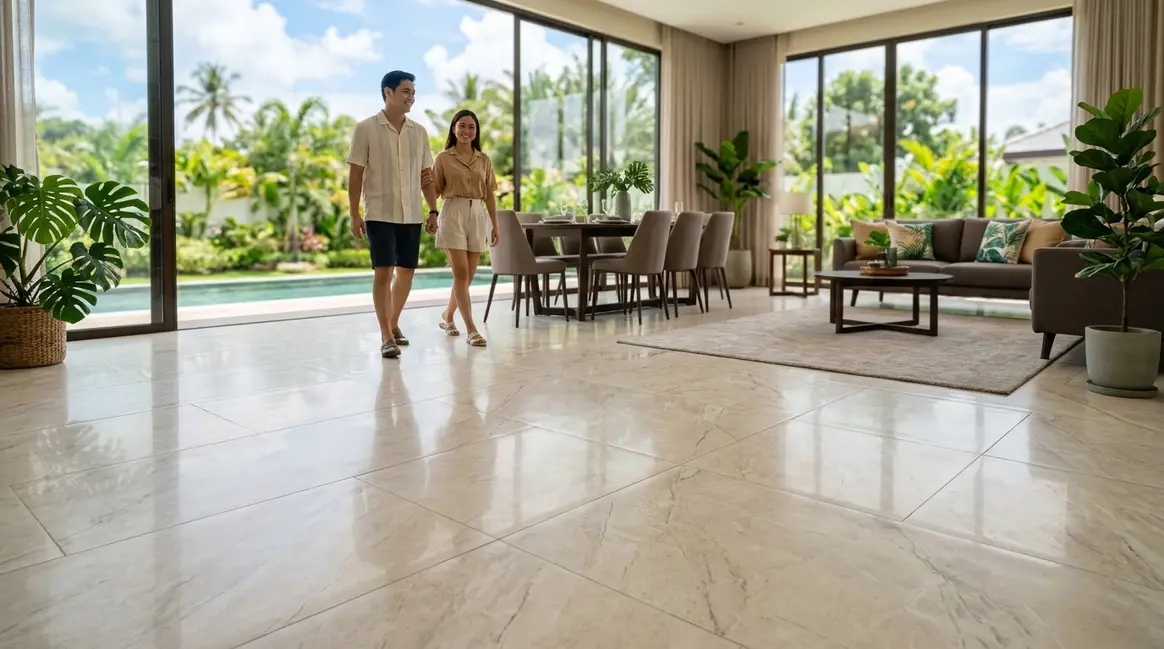
Porcelain Tile Exporter to Philippines: Buyer Guide
Residential, hotel, office, and mixed-use projects continue to create demand for durable flooring in the Philippines. For dealers, developers, and contractors, international sourcing can offer wider design choices, reliable production capacity, consistent specifications, and competitive wholesale options.
India is an established ceramic production and export market. However, choosing a porcelain tile exporter to Philippines involves more than comparing catalog designs and unit prices. Buyers must assess technical performance, quality control, packaging, shipping terms, and import requirements. This guide explains each step. Philippine buyers may also contact SkyTouch Ceramic to discuss products, samples, bulk orders, and export support.
Why Source Porcelain Flooring Tiles for Philippine Projects?
Performance in humid and busy spaces
Porcelain flooring tiles have a dense structure and low water absorption. These features make them practical for many homes and commercial interiors in a humid climate. They are also easy to clean and available in finishes made for different traffic conditions.
Tile quality is only one part of a durable floor. The substrate, adhesive, grout, movement joints, drainage, and installation method also affect long-term performance. Even a high-quality tile may fail if it is laid on an uneven base or installed with poor adhesive coverage.
Residential, commercial, and hospitality uses
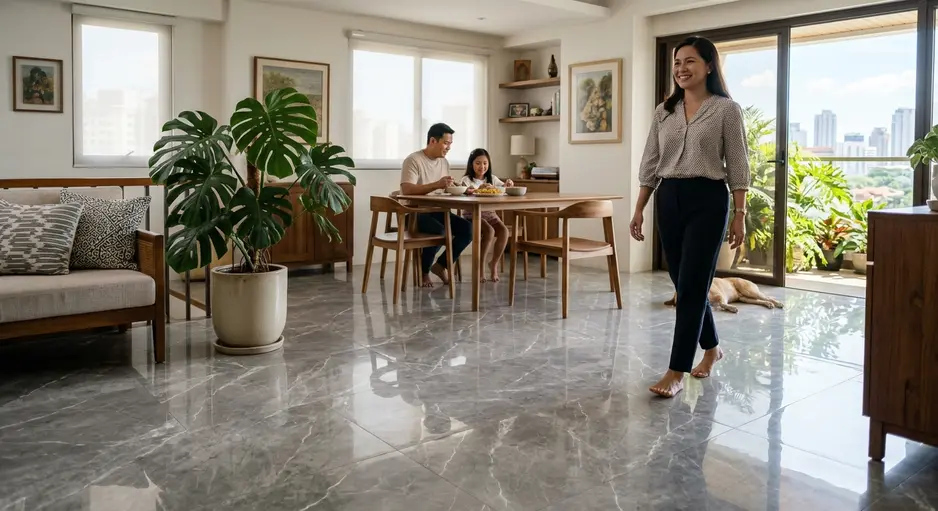
Porcelain tiles for residential projects in Philippines can be used in condominium units, subdivisions, kitchens, dining rooms, and living spaces. The right finish may also suit bathrooms and covered outdoor areas, subject to verified slip performance.
A commercial porcelain flooring supplier Philippines buyers work with should be able to match products to traffic levels. Typical applications include offices, retail stores, restaurants, and common areas. Porcelain tiles for hotels and offices may need different surfaces for guestrooms, corridors, entrances, and dry lobby zones.
Direct importing or local purchasing?
Buying through a porcelain tile distributor Philippines offers local stock, faster access, and easier replacement. Direct importing can provide more designs, project-specific quantities, and wholesale terms, but it also involves minimum orders, freight, customs clearance, and longer planning cycles.
Direct imports usually make the most sense for dealership inventory, repeat purchases, or project-scale orders rather than small home renovations.
What Specifications Define Quality Porcelain Tiles?
Composition and water absorption
Vitrified porcelain tile composition commonly includes refined clay, feldspar, silica, and pigments. The material is pressed and fired at a high temperature to create a dense tile body.
Under ISO-based classification, porcelain generally has a water absorption rate of 0.5% or less. Buyers should not rely on a catalog statement alone. Request a current laboratory report that identifies the tested product, standard, result, and testing body.
Abrasion resistance and PEI ratings
Abrasion resistance classification helps buyers judge how a surface may perform under foot traffic. The PEI wear rating is mainly used for the surface wear resistance of glazed tiles. Full-body or unglazed products may require a different abrasion test and interpretation.
Choose performance according to the application. Bedrooms may experience light traffic, while living areas need stronger wear performance. Hotel corridors, offices, stores, and public spaces need products suited to frequent use. Appearance alone does not show whether a tile can handle the expected traffic.
Slip resistance for floor applications
Matte or structured finishes are often considered for wet or higher-risk locations. Polished surfaces can work well in selected dry interiors, but they require careful review near entrances, bathrooms, pools, and outdoor areas.
Ask for slip-resistance results linked to a named test method, such as ANSI A326.3 or a specified ramp test. DCOF values, ramp ratings, and other systems use different methods, so their results should not be treated as interchangeable. Learn more about this topic
Edges, tolerances, and strength
Rectified tile edges are mechanically finished to create more uniform dimensions. They can support a clean layout, but they do not remove the need for grout joints. Buyers should also review tile thickness, dimensional tolerance, warpage, flatness, breaking strength, shade, and caliber consistency.
ISO 13006 provides ceramic tile classifications and characteristics. Relevant ISO 10545 methods cover properties such as dimensions, water absorption, strength, and abrasion. Test documents should match the type and batch being considered.
Which Porcelain Floor Tile Type Fits Your Project?
Polished and matte surface finishes
Polished porcelain reflects light and can create a bright, refined appearance. Marks, scratches, and dirt may be more visible on some polished surfaces. These tiles are often considered for dry living areas, offices, and selected lobby spaces.
Matte tiles produce less glare and may be easier to maintain in busy settings. A matte appearance does not automatically prove slip safety, so buyers should still request test data for wet or public areas.
Glazed and full-body porcelain options
Glazed porcelain offers broad design flexibility because the decorative surface can reproduce marble, concrete, wood, or natural stone. Full-body products carry their composition or color deeper through the tile, making visible wear less noticeable in some demanding applications.
Factory terms can vary. “Full-body” and “color-body” may not describe the same construction from every supplier. Ask for a clear product description, cross-section details, and relevant test information before approving an order.
Wood-look, stone-look, and large formats
Common choices include marble-look, travertine-look, limestone-look, concrete-look, and wood-look designs. Neutral colors are useful for hotels, offices, residential developments, and stores because they work with many interior themes.
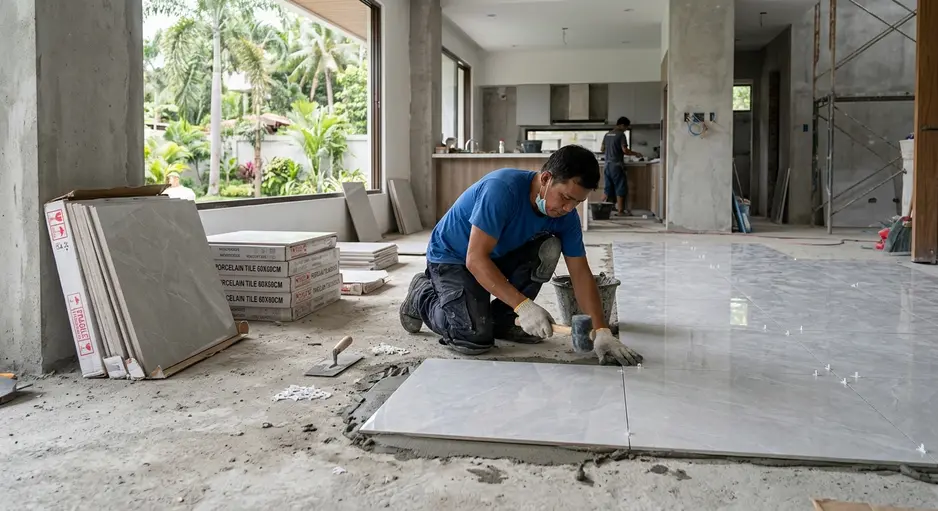
Large-format tile dimensions may include 600 × 600 mm, 600 × 1200 mm, 800 × 800 mm, and 800 × 1600 mm, depending on factory support. Large rectified tiles require a flat base, suitable adhesive coverage, movement joints, careful handling, and experienced installers to control lippage.
Quick application guide
Living rooms and guestrooms
Finish: Matte or polished. Priority: Easy care and suitable wear performance. Typical sizes: 600 × 600 mm or 600 × 1200 mm.
Hotel corridors and offices
Finish: Matte or low-glare. Priority: Abrasion resistance, cleaning, and slip performance. Typical sizes: 600 × 600 mm or 600 × 1200 mm.
Dry lobby areas
Finish: Polished or matte, based on the design plan. Priority: Traffic rating, maintenance, and entrance risk. Typical sizes: 800 × 800 mm or larger formats.
Bathrooms and covered wet zones
Finish: Tested matte or structured surface. Priority: Verified slip resistance, drainage, and correct installation. Typical sizes: Project-specific. Read our related guide
How Do You Choose a Porcelain Tile Exporter to Philippines?
Manufacturer, exporter, or distributor?
A porcelain tile manufacturer produces the material. An exporter manages international sales and shipping, while a porcelain tile wholesale supplier focuses on bulk quantities. A trading company may source from one or more factories. Local importers and distributors hold stock within the Philippines.
Each model has value. Direct factory or export supply can suit large, planned orders. A local supplier is often more convenient when buyers need immediate stock, smaller quantities, or faster replacements.
Supplier verification checklist
Before placing a deposit, request:
- Company registration and business details
- Factory or warehouse information
- A current catalog and technical data sheets
- Relevant and recent product test reports
- Samples from current production
- Production and dispatch lead times
- Export history or shipment evidence, where appropriate
- Written complaint and replacement procedures
Questions Philippine dealers should ask
A porcelain tile supplier for Philippine dealers should clearly state the minimum order per design, color, and size. Dealers should also ask about mixed-container policies, private-label cartons, repeat-batch availability, shade control, sample boards, and replacement stock.
Written answers are important. They reduce confusion about what will be produced, packed, inspected, and shipped.
What makes the best porcelain tile exporter?
The best porcelain tile exporter for a particular buyer is not always the one offering the lowest unit price. A dependable supplier provides clear specifications, stable quality, realistic lead times, export-safe packaging, transparent Incoterms, inspection access, and responsive after-sales support.
SkyTouch Ceramic is an Indian supplier that Philippine buyers may contact for product specifications, samples, bulk quotations, packaging details, and export assistance. Buyers should compare the offered products and documents with their project requirements before ordering.
How to Import Porcelain Tiles into Philippines
Confirm importer and product requirements
Buyers researching how to import porcelain tiles into Philippines should first confirm that the importer is registered and eligible to complete customs transactions. A licensed Philippine customs broker can help verify classification, taxes, permits, and clearance steps.
Check current DTI–Bureau of Philippine Standards requirements, including whether product certification or an Import Commodity Clearance applies. Relevant PNS ISO 13006 requirements and any labeling or marking rules should also be reviewed. Regulations can change, so confirm them before shipment.
Classify the goods and estimate landed cost
Ceramic tiles are generally classified under HS heading 6907, but the correct subheading depends on the product. Ask a customs broker to confirm the classification rather than relying on a supplier’s general description.
The landed cost of porcelain tile export from India may include:
- Ex-factory or FOB product value
- Transport and origin handling in India
- Ocean freight and marine insurance
- Customs duty, when applicable
- Philippine VAT
- Port, broker, storage, and handling charges
- Delivery from the port to the warehouse or project
Documents and customs clearance
Export documentation and customs clearance may require a commercial invoice, packing list, bill of lading, certificate of origin, insurance certificate, test reports, and current product clearances. The final document list depends on the shipment and current Philippine rules. Discover more insights
Qualifying goods may receive preferential tariff treatment under an applicable ASEAN–India arrangement. Eligibility depends on current rules and valid proof of origin, so buyers should confirm the position with their broker.
Freight and shipping terms
International freight and shipping terms define which party manages costs and risks. EXW starts at the seller’s premises. FOB generally covers delivery on board at the origin port. CFR includes ocean freight, while CIF also includes specified insurance.
Confirm responsibility for freight, insurance, destination handling, customs clearance, local transport, demurrage, and detention before signing the order.
Packaging, Loading, and Quality Control
Carton and pallet protection
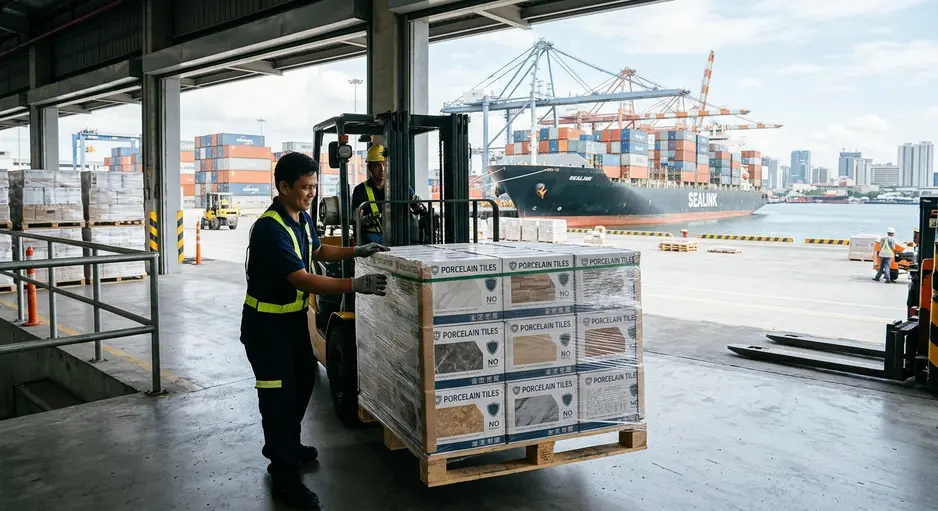
Carton packaging and pallet protection help reduce damage in transit. Useful measures include export-grade cartons, edge protection, strapping, stretch wrapping, moisture protection, and clear labels showing design, size, shade, caliber, and quantity.
Pallet and non-pallet loading each affect cost, handling, and usable space. The chosen method should match the tile, container plan, unloading equipment, and buyer’s requirements.
Container loading capacity
Container loading capacity changes with tile size, thickness, carton weight, square meters per carton, palletization, carrier rules, and payload limits. There is no reliable universal figure for every porcelain product.
The exporter should issue a product-specific loading plan and packing list for bulk porcelain tiles Philippines orders.
Quality inspection before shipment
A pre-shipment check should cover:
- Approved design, color, and surface finish
- Size, thickness, shade, and caliber
- Edges, surface defects, flatness, and warpage
- Water absorption and other test documents
- Carton quantities, markings, and pallet condition
- Container cleanliness and loading security
- Loading photographs and the final seal number
Use an approved “golden sample” as a reference. For a high-value order, consider an independent inspection before loading. Check out this resource
How can importers reduce tile breakage?
Use strong cartons, protected edges, correct stacking, and secure loading with limited empty space. Marine insurance can help manage shipping risk. Inspect the cargo on arrival and record visible damage before moving it. Order additional material for cuts, breakage, pattern matching, and future repairs.
Bulk Ordering Strategy for Philippine Importers
Begin with samples or a trial order
Review samples under the project’s actual lighting. Test cleaning, grout combinations, and slip performance where relevant. Before scaling up, confirm that the production batch matches the approved appearance, shade, caliber, and packaging.
Get Started with Porcelain Tile Flooring Exporter & Supplier to Philippines
Plan quantity around the layout
Extra stock is useful for cutting, breakage, complex patterns, and later repairs. There is no single wastage allowance for every project. Straight layouts often require less extra material than diagonal patterns, intricate designs, or large-format installations.
Example: tiles for a hotel project
A Philippine hotel buyer may select matte marble-look porcelain for guestrooms and corridors, while considering polished material for selected dry lobby areas. A specification-led process would include:
- Defining wear and slip needs for each zone
- Requesting samples and technical reports
- Approving the production shade and caliber
- Calculating installation waste and replacement stock
- Comparing FOB or CIF terms and total landed cost
- Arranging quality inspection before shipment
- Checking the loading report and documents before arrival
This approach is safer than choosing porcelain floor tiles only from a price list or catalog image.
FAQs About Porcelain Tile Imports to Philippines
Is porcelain tile suitable for homes in the Philippines?
Yes, it can suit living rooms, kitchens, bedrooms, and other areas when the right finish is selected. Low water absorption, simple maintenance, correct substrate preparation, suitable adhesives, and skilled installation all support better results.
What is the water absorption rate of porcelain floor tiles?
The ISO-based classification threshold is 0.5% or less. Buyers should request a laboratory report that identifies the tested product and method instead of accepting an unsupported statement.
Are polished porcelain tiles slippery?
Slip performance depends on the surface, water or other contaminants, cleaning, footwear, and test method. Polished tiles may suit dry interiors, but verified slip data is important for entrances, wet areas, and public spaces.
How much does it cost to import porcelain tiles from India?
Total cost depends on the tile type, size, finish, volume, packing method, freight, exchange rates, tariff treatment, VAT, port fees, brokerage, and local delivery. Compare landed cost rather than factory price alone. Explore further
What documents are needed?
Common documents include the invoice, packing list, bill of lading, certificate of origin, test reports, and insurance certificate when applicable. Current Philippine certification, permits, or clearance documents may also be required.
Can dealers order mixed designs in one container?
It depends on minimum quantities, production schedules, carton counts, and loading compatibility. Request a written mixed-container plan showing each design, size, quantity, weight, and production batch.
How long does export from India take?
The total timeline includes production, inspection, origin handling, vessel scheduling, ocean transit, port processing, and customs clearance. These stages vary, so buyers should not rely on one fixed delivery promise.
Where can buyers request a wholesale quotation?
Philippine dealers, importers, contractors, and project buyers can contact SkyTouch Ceramic for catalogs, available sizes and finishes, technical information, samples, container planning, and porcelain tile wholesale quotations.
Build a Safer Porcelain Tile Supply Plan
Successful sourcing depends on more than the price per square meter. Buyers should compare test reports, application needs, production consistency, packaging, loading plans, shipping terms, import compliance, and total landed cost.
Philippine dealers, developers, contractors, and porcelain tile importers Philippines can contact SkyTouch Ceramic to discuss designs, bulk quantities, specifications, packing, shipping terms, and export documents. Request the latest catalog, ask for samples, submit project details, or discuss mixed-container loading before placing an order.
Import rules and tariff treatment can change. Verify current requirements with DTI–BPS, the Philippine Bureau of Customs, and a licensed customs broker before shipment.